ORVIA Lens™
“Know the truth of your service before someone else finds it for you.”
Independent. Intelligence-informed. Evidence-led.
Residential Homes
Specialist oversight for residential homes settings.
ORVIA supports residential homes by helping managers, providers and families understand whether the culture of everyday living truly reflects what people need — not just what the service provides.
Residential homes are people’s long-term homes. The quality of life inside them depends not on policies, but on culture — how staff speak to residents, how mealtimes feel, whether people have genuine choice, and whether concerns are heard and acted on.
Key Risks ORVIA Helps Identify
Cultural drift where routine replaces person-centred care
Staff normalising restrictive or controlling behaviours
Activities and engagement becoming tokenistic rather than meaningful
Complaints processes that discourage residents from speaking up
Documentation that records compliance but not lived experience
Isolation of residents without adequate social connection
Learning from Real-World Evidence

Public safeguarding reviews have shown that residential care settings can develop institutional cultures over time — where routine replaces person-centred care, staff normalise controlling behaviours, and residents’ everyday experiences drift from what providers believe is happening. CQC’s work on closed cultures has highlighted how poor leadership visibility, weak escalation and families not being heard can allow harm to persist undetected.
BBC Panorama investigation into elderly care (2014)
Source: CQC closed cultures guidance and published safeguarding adult reviews
What this teaches:
Everyday safeguarding — dignity, choice, belonging — can erode gradually without anyone noticing
Families who raise concerns may be treated as complainants rather than partners in care
Closed cultures can develop in any setting where external visibility is limited and internal challenge is weak
ORVIA’s role in residential settings is to help providers see what daily life actually looks like — through observation, reflection and honest feedback that supports genuine improvement rather than defensive compliance.
Public-domain references
• CQC: Closed cultures — identifying and responding to closed cultures in health and care
• Published Safeguarding Adults Reviews — residential care settings
• NICE Guideline SC1: Managing medicines in care homes
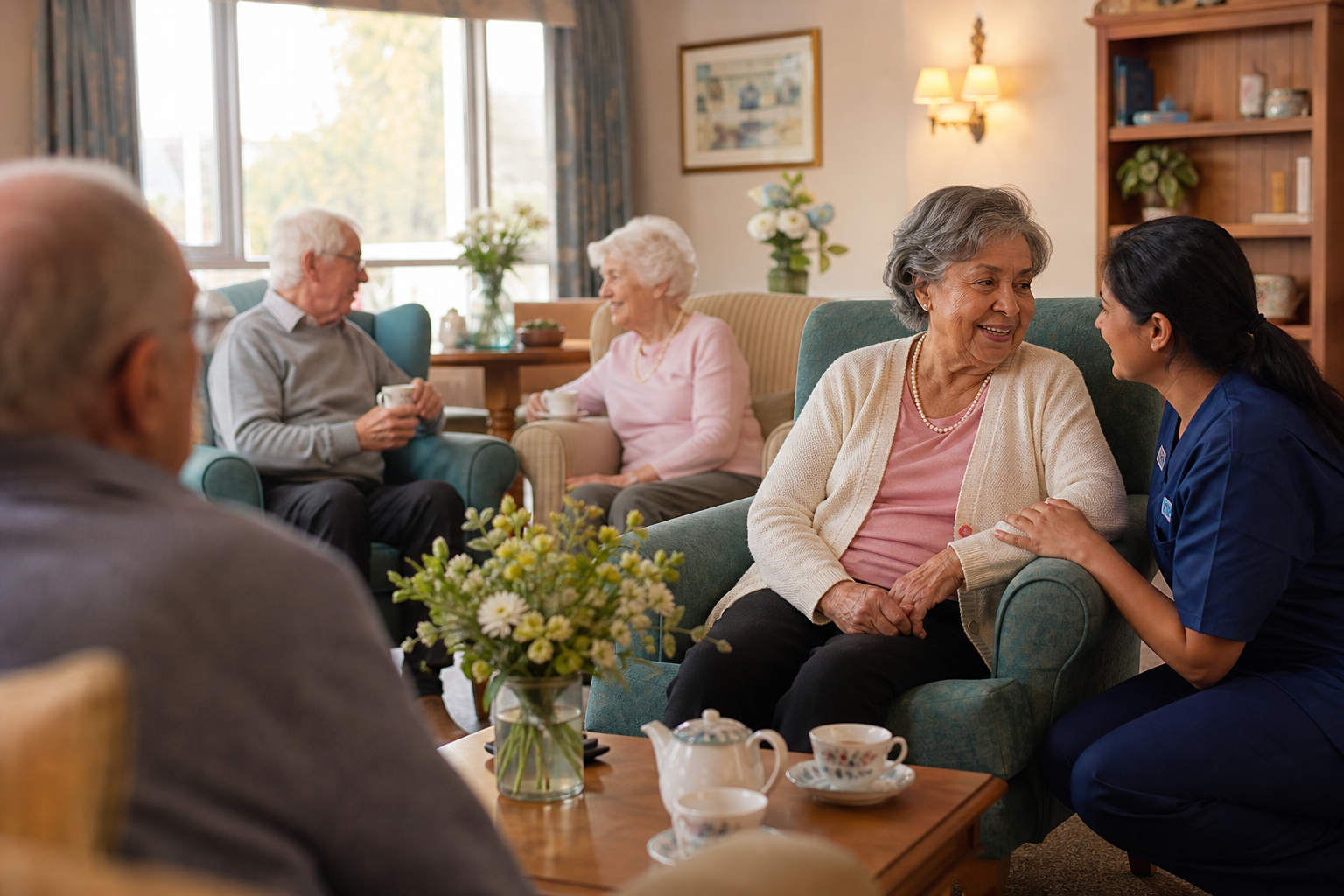
How ORVIA Supports This Setting
ORVIA provides reflective operational insight into the culture, belonging and everyday safeguarding within residential settings. We help providers see what daily life actually looks like — through observation, reflection and honest feedback.
Our role is not to criticise good services. It is to help organisations see what may otherwise be missed, strengthen accountability and improve the human reality of care.
Our Approach in This Setting
Observation
Looking at what is actually happening — not what systems say should be happening.
Reflection
Helping leaders and teams reflect on practice with honesty and without blame.
Visibility
Making the invisible visible — surfacing risks others may not see.
Insight
Providing structured, evidence-led intelligence that supports better decisions.
Accountability
Strengthening governance without blame — Accountability Without Fear™.
Seeing What Others Miss™
The ORVIA principle — looking where others don’t, asking what others won’t.
If you want to understand what is really happening in your service — or if you have concerns that are not being addressed — ORVIA can help.
SECTOR BROCHURE
📄 Residential Homes Download Brochure (PDF)
Request this brochure →
ORVIA ACADEMY
Want to strengthen practice in this area?
Our training is grounded in real-world practice — not theory. ORVIA Academy courses are designed for people who want to notice more, respond better, and build cultures where good practice is the norm.
⚠️ Important: ORVIA can support, review and advise where there are concerns about care, safety, culture or accountability. We are not an emergency service, the police, CQC, a local authority safeguarding team, the NHS or a legal representative. If someone is at immediate risk of harm, please contact emergency services or the relevant safeguarding authority.
⚠️ This page has been automatically translated. For safeguarding concerns, please contact us directly and we will arrange interpretation support.