
Category: Safeguarding

Safeguarding insights, methodology and best practice

  • How to Prepare for an Unannounced Care Home Visit (And Why You Shouldn’t Have To)

    How to Prepare for an Unannounced Care Home Visit (And Why You Shouldn’t Have To)

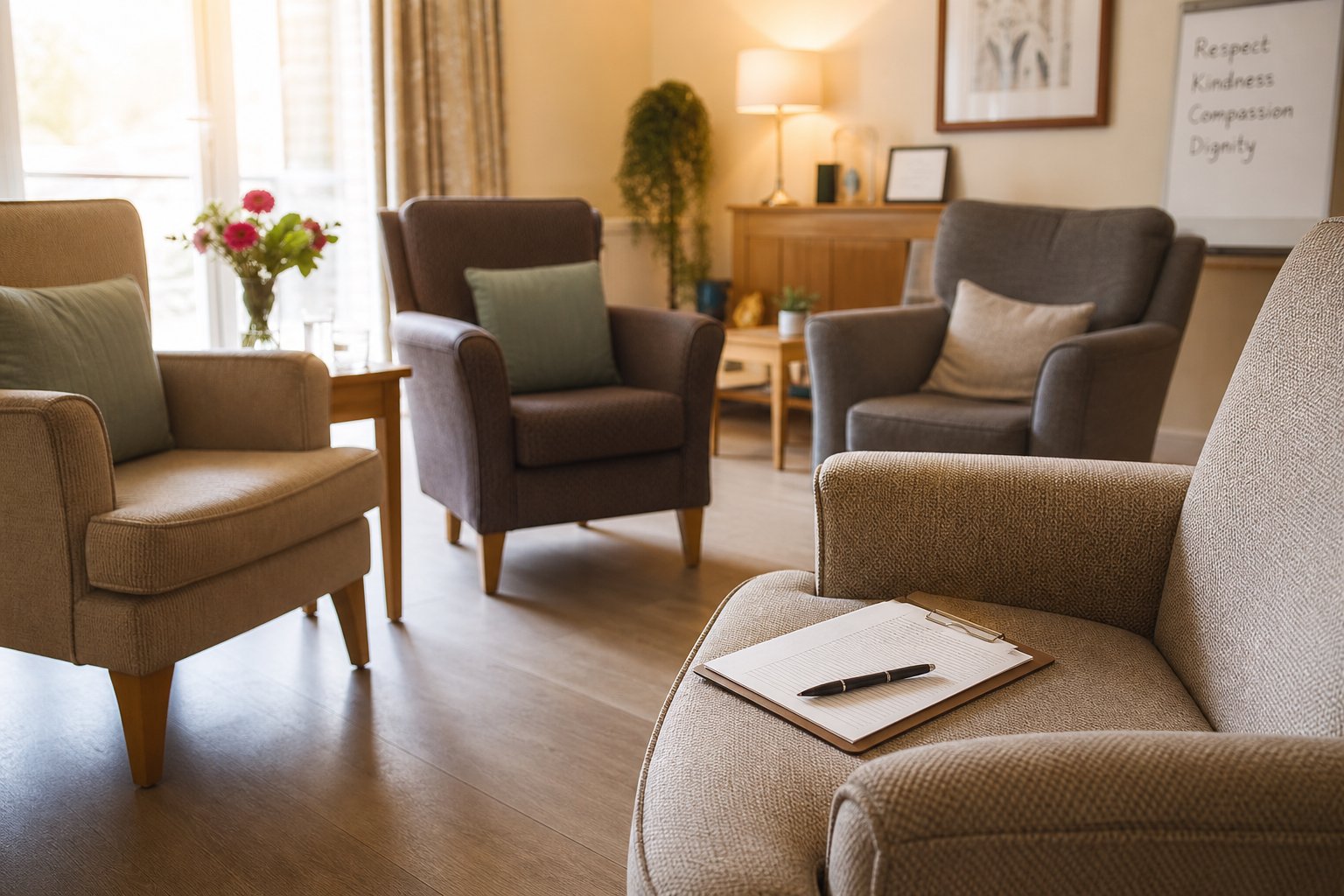
    Warm, person-centred care home environment

    Here’s the honest version: if your service needs advance warning to look its best, that’s worth paying attention to. The goal isn’t to be “inspection ready” — it’s to run a service that looks the same on any day, at any time, because the care is genuinely good.

    Let’s Be Honest About This

    Care providers know that CQC can arrive without notice. Local authority commissioners can conduct unannounced monitoring visits. Families can walk in at any time. And yet the phrase “prepare for an unannounced visit” persists.

    That tension tells you something important. Not that people are hiding problems — most aren’t — but that there’s often a gap between “how things are on a good day” and “how things are every day.” Closing that gap is what person-centred care actually means.

    What a Trained Eye Notices in the First Ten Minutes

    Regulators and independent reviewers don’t just read files. They observe. Here’s what stands out — for better or worse:

    The atmosphere. Is the environment calm or rushed? Do staff greet visitors naturally, or does a wave of tension go through the building? Do residents look settled — or like the furniture has just been rearranged?

    Sensory signals. Does the building smell clean, or heavily masked with air freshener? Is the temperature comfortable? These small things reveal more about daily reality than any quality report.

    Staff interactions. Are staff engaging with residents — making eye contact, using first names, genuinely listening? Or are they clustered around a desk? When a resident asks for something, how quickly does someone respond?

    The Details That Tell the Real Story

    Person-centred care lives in the details. These are the things that reveal whether a service truly puts people first:

    🍽️ Food, Mealtimes & Nutrition

    Does the menu match what’s actually being served? More importantly — are dietary requirements, allergies and personal preferences being genuinely honoured? Is Mrs. Thompson getting the soft diet she needs, or the same meal as everyone else? Is there a choice, or is it one plate for all?

    Look beyond the menu. Is the dining area warm and welcoming, or institutional? Are there little touches that make mealtimes feel human — a food cart, a tuck shop, a choice of where to sit? Residents who lived through the 1950s, ’60s, ’70s — do they see anything in that dining room that connects to their own history? A mural. A familiar brand. Music they recognise. These things matter enormously.

    🏠 The Environment

    Is the call bell within reach? Are drinks accessible throughout the day, not just at mealtimes? Is the activities board showing today’s date or last week’s? Are communal areas lived-in and personalised, or clinical and bare?

    A care home should feel like someone’s home — because it is. Not a sterile corridor with numbered doors. The question isn’t “is it clean?” The question is “would you want your mum to live here?”

    📋 Documentation

    If a care plan says a resident needs repositioning every two hours, there should be evidence it’s happening — not just evidence it was recorded. There’s a difference, and experienced reviewers know it.

    💬 What Staff Know

    Can staff talk about the people they care for as people? Not recite from a file — genuinely tell you what makes someone smile, what calms them when they’re distressed, what’s changed recently. A staff member who truly knows their residents is the strongest evidence of good care.

    📋 Free Safeguarding Self-Assessment
    12 honest questions to ask about your service — before someone else does. Based on real independent review methodology.
    Get the Free Assessment
    No spam. Unsubscribe any time.

    The Right Question to Ask

    Stop asking “Are we ready for an unannounced visit?” and start asking: “If someone spent a full day living the life of one of our residents — eating what they eat, sitting where they sit, waiting when they wait — would they feel safe, valued and genuinely cared for?”

    If the honest answer is yes — every shift, every corridor, every mealtime — you don’t need to prepare for anything. You’re already there.

    If the answer is “mostly, but…” — that’s not failure. That’s the starting point for a conversation about how to make good care even better. And that’s exactly where independent oversight adds the most value.
    Want an Honest Perspective?
    An independent review sees what familiarity makes invisible — and helps you build on what’s already working.
    Start a Conversation
    About ORVIA: Independent safeguarding and operational oversight for care providers who want the truth, not reassurance. Learn more for care providers →
  • Why Your Safeguarding Policy Isn’t Enough

    Why Your Safeguarding Policy Isn’t Enough

    Light-filled corridor — the space between policy and practice

    Every serious case review tells a similar story: the policy was there. The training records were up to date. And yet someone was harmed. The gap isn’t in the paperwork — it’s in the space between what the policy says and what people actually experience.

    The Compliance Comfort Zone

    Most organisations believe they have safeguarding covered — and with good reason. There’s a policy in the handbook. Staff signed it during induction. The annual refresher training is booked. From a regulatory perspective, the foundations are solid.

    But here’s the thing: a safeguarding policy is a document. Safeguarding is a behaviour. And the distance between the two is where the real work lives.

    That’s not a criticism of anyone’s efforts. Policies are essential. But they’re a starting point, not a destination.

    What Policies Can’t Do On Their Own

    Policies can’t read a room. They can’t detect the shift in atmosphere when a particular manager is on shift. They can’t notice that a resident has gone quiet, or that a child who used to be confident has become withdrawn. Those signals need human observation — and a culture that encourages people to act on what they notice.

    Policies can’t overcome fear. A whistleblowing procedure is only as strong as the culture around it. If staff have seen colleagues face consequences for raising concerns — even informally — the policy becomes invisible.

    Policies can’t prevent drift. Services change gradually. What was once exceptional becomes acceptable. What was acceptable becomes “how we’ve always done it.” A policy written two years ago can’t detect the slow evolution of the culture around it.

    📋 Free Safeguarding Self-Assessment
    12 honest questions to ask about your service — before someone else does. Based on real independent review methodology.
    Get the Free Assessment
    No spam. Unsubscribe any time.

    What Actually Keeps People Safe

    Culture. Do staff genuinely believe safeguarding is everyone’s responsibility? Not just the designated lead’s. Culture is what people do when nobody is watching — and when nobody is watching is often when safeguarding matters most.

    Professional curiosity. The willingness to ask gentle but important questions. Why is that child always in the same clothes? Why does that resident seem uncomfortable around a particular staff member? Curiosity is the antidote to normalisation.

    Independent perspective. Someone from outside your system, looking with fresh eyes. Not to catch anyone out — but to see what familiarity has made invisible. The best services welcome this, because they know it makes everything stronger.

    Reflective practice. Not just “what happened?” but “why did we respond that way? What would we do differently?” Reflective reviews build the kind of deep, instinctive understanding that policies alone can’t create.

    Some Honest Questions Worth Asking

    These aren’t tests. They’re conversation starters — the kind of questions that reveal where your real strengths are, and where there might be room to grow:

    • When was the last time a staff member raised a safeguarding concern that turned out to be nothing? (If the answer is “never”, that might mean people aren’t feeling confident enough to speak up.)
    • If someone walked into your service unannounced right now, would you feel confident about what they’d find?
    • Can every member of staff — not just the safeguarding lead — explain what they’d do if someone disclosed abuse to them today?
    • When was the last time someone external told you something about your service that you didn’t already know?

    If any of those gave you pause, it doesn’t mean your service is failing. It means there’s an opportunity to make it even stronger.

    Beyond the Paperwork
    ORVIA looks at what’s really happening — so you can build on what’s working and strengthen what needs attention.
    Start a Conversation
    About ORVIA: Independent safeguarding and operational oversight. Seeing what others miss. Learn how we work →
  • What Is an Independent Safeguarding Review? And Why Your Service Needs One

    What Is an Independent Safeguarding Review? And Why Your Service Needs One

    Care home common room with comfortable seating

    An independent safeguarding review isn’t about catching people out. It’s about seeing what familiarity has made invisible — so the people in your care stay genuinely safe.

    Why Internal Reviews Have Limits

    Every care provider, every school, every organisation working with vulnerable people conducts some form of safeguarding review. Policies are checked. Training records are updated. And the people doing those checks are usually dedicated, hard-working professionals who genuinely care.

    But internal reviews have a natural limitation: the people conducting them are part of the same culture, the same routines, and the same daily pressures as the service itself. Over time, things that would stand out to a fresh pair of eyes become part of the wallpaper. That’s not a failing — it’s human nature.

    An independent review simply brings back that fresh perspective.

    What Makes a Review “Independent”?

    An independent safeguarding review is conducted by someone with no financial, contractual or professional relationship with the service. They come in with no assumptions, no institutional history, and no reason to see things through a particular lens.

    The best-run services in the country actively seek this kind of scrutiny — not because they think something is wrong, but because they understand that an outside perspective strengthens everything they’re already doing well.

    What an Independent Review Looks At

    Culture, not just compliance. Is safeguarding a lived behaviour or a policy document? Do staff feel comfortable raising concerns? Is there a gap between what leadership believes is happening and what the day-to-day reality feels like?

    The person at the centre. Safeguarding starts and ends with the person. An independent reviewer talks to the people receiving care, not just the people providing it. They observe interactions, body language, the small signals that tell you whether someone feels genuinely safe and valued.

    Governance and oversight. Are the right people seeing the right information? When something goes wrong, does the system learn — or does it move on?

    Drift. Services that were once outstanding don’t change overnight. They drift — slowly, imperceptibly. An independent review catches that drift early, while it’s still easy to correct.

    📋 Free Safeguarding Self-Assessment
    12 honest questions to ask about your service — before someone else does. Based on real independent review methodology.
    Get the Free Assessment
    No spam. Unsubscribe any time.

    Who Benefits?

    Care homes and domiciliary care providers — CQC expects independent auditing under Regulation 12. But beyond compliance, an independent review gives you confidence that the care you believe is being delivered actually matches what residents experience.

    Schools and education settings — Between Ofsted visits, who’s checking that safeguarding culture hasn’t shifted? An independent review provides that assurance.

    Commissioners and local authorities — When you commission services, you need assurance that goes beyond the provider’s own reporting. Independent oversight gives you an honest, unfiltered picture.

    Any organisation working with vulnerable people — Legal firms, faith organisations, sports clubs, charities. Safeguarding responsibilities don’t stop at the care sector.

    What It Typically Costs

    Independent safeguarding reviews vary depending on the size and complexity of the service. As a general guide, expect to invest from around £1,500 for a focused review of a smaller service, through to £5,000+ for a comprehensive multi-day assessment.

    Compare that to the cost of a serious incident, a failed inspection, or the human cost of preventable harm. Most services that invest in independent oversight describe it as one of the most valuable things they’ve done.

    How ORVIA Approaches It

    We are not a consultancy. We don’t help you pass inspections. We come alongside your service and tell you what we genuinely find.

    Our approach is built on reflective methodology — observation, professional curiosity, and the principle that safeguarding starts and ends with the person. We look at what life is actually like for the people inside your service, then we have an honest conversation about what we’ve seen.

    From the Field
    ORVIA’s founder has recently completed an independent safeguarding assessment for a service he previously worked alongside. Due to the sensitive nature of the findings, the full report remains confidential — but the organisation is acting on it. An executive meeting with their board has been scheduled based on ORVIA’s recommendations.

    That’s what a genuine independent review looks like in practice: honest findings, taken seriously, leading to real change. The system works.

    Ready for an Honest Conversation?
    No obligation. No sales pitch. Just a conversation about what your service might benefit from.
    Start a Conversation
    About ORVIA: Independent safeguarding and operational oversight. We sit in the gap between what systems say is happening and what people are actually living through. Learn how we work →
  • School Safety in 2026: What Every Headteacher Needs to Know

    School Safety in 2026: What Every Headteacher Needs to Know

    School corridor with natural light

    This isn’t about creating fear. It’s about making sure the people responsible for children’s safety feel confident, prepared and supported — because preparation is what turns a crisis into a managed situation.

    Why This Conversation Matters Right Now

    The UK national threat level remains at SUBSTANTIAL. Police forces across the country are running preparedness drills with schools — not to frighten, but because being ready makes the difference. This isn’t new territory for emergency services. It should not be unfamiliar territory for schools either.

    Yet most schools in England and Wales have never conducted a genuine, scenario-based safety assessment. Not a fire drill. Not a policy review. A thoughtful, practical evaluation of whether staff would know what to do — and feel confident doing it — if something went wrong.

    That’s not a criticism. It’s an opportunity.

    What “Prepared” Actually Looks Like

    Preparation isn’t about expecting the worst. It’s about building the kind of quiet confidence that means your team can think clearly under pressure. It’s about staff who:

    • Notice when something doesn’t look right — an unattended bag, a gate left open, an unfamiliar face — and know how to respond calmly
    • Understand the difference between a lockdown and an evacuation, and when each applies
    • Can reassure a frightened child while managing the situation around them
    • Know how to verify information before acting on it (because not every alert is what it seems)

    These aren’t superhuman skills. They’re practical, learnable responses that become instinctive with the right training.

    The Three Layers of School Safety

    1. Everyday Awareness — The small things that prevent bigger ones. Recognising what doesn’t belong. Knowing who should be on site and who shouldn’t. Building a culture where “I noticed something” is always welcome, never dismissed.

    2. Recognition & Response — When “something isn’t right” needs to become action. Understanding lockdown procedures, communication protocols, and how to manage uncertainty without panic.

    3. Post-Incident Support — What happens after matters as much as what happens during. Children need to process what they’ve experienced. Staff need debriefing. The school community needs honest, age-appropriate communication.

    📋 Free School Safety Checklist
    10 things every school should have in place — based on GOV.UK guidance and real-world methodology. Delivered straight to your inbox.
    Get the Free Checklist
    No spam. Unsubscribe any time.

    Common Gaps We See

    Over-reliance on written policy. A lockdown procedure in a folder is a starting point, not a finish line. If staff haven’t walked through it — physically, practically, under mild pressure — it remains theory.

    Normalcy bias. “It won’t happen here” is human nature, not negligence. But the schools that handle incidents well are the ones that gently challenged that assumption beforehand.

    The child’s perspective is missing. A lockdown drill that terrifies children has failed before it started. Every safety measure should be designed with children’s emotional experience at its centre — because safeguarding starts and ends with the person.

    A Good Place to Start

    Before you commission anything or spend a penny, try our free interactive scenario challenge. It takes five minutes, puts you in three realistic school situations, and gives you honest feedback on your responses. No sign-up required. It’s simply a useful starting point.

    Try the Free Scenario Challenge
    3 scenarios · 9 questions · 5 minutes · No sign-up
    Take the Challenge

    When You’re Ready to Go Further

    ORVIA’s School Safety & Preparedness Programme is built on real-world methodology — not generic training slides. It covers everyday awareness, active threat response, post-incident welfare, and the child’s perspective throughout. Because keeping children safe means keeping them emotionally safe too.

    View pricing and packages →

    About ORVIA: We are an independent safeguarding and operational oversight organisation. We work alongside schools and care services to make sure people are genuinely safe. Learn how we work →